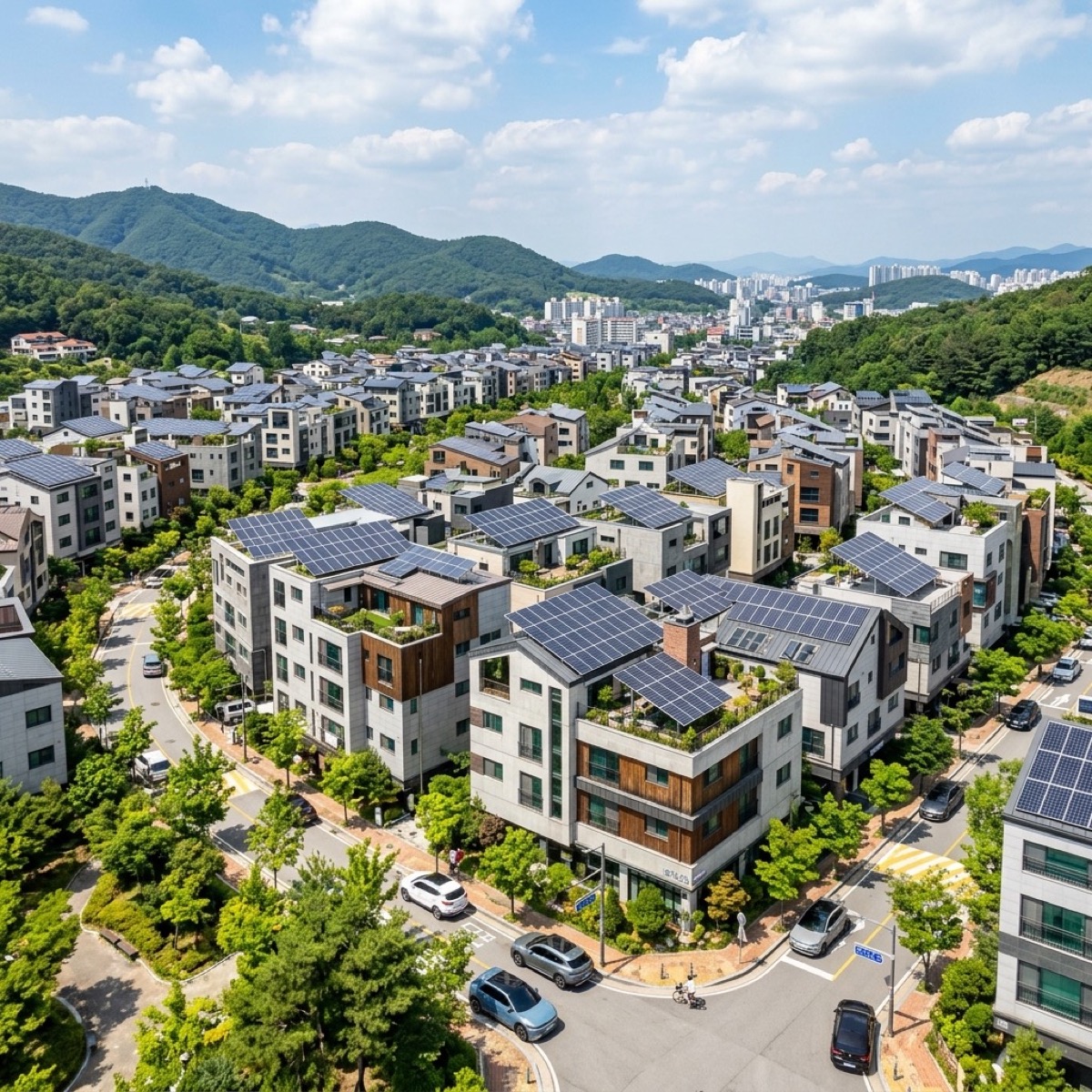
About This Project
Gwangju Metropolitan City is establishing itself as a model for urban sustainability in South Korea. While large-scale wind and solar fields face land allocation conflicts and ecological debates in rural counties, urban rooftops present a massive, non-invasive clean energy grid. By organizing citizens into local energy cooperatives, communities can directly participate in Gwangju's 2045 carbon neutrality goals while gaining energy independence and reducing utility bills.
The Gwangju Renewable Energy Community project, led by Dasom Saessak Initiative, empowers citizens to lease, fund, and operate solar microgrids. We co-finance solar equipment installations, conduct local home energy audits, and provide vocational training in green energy grid management.
"Transitioning to clean energy shouldn't be top-down. True climate resilience occurs when neighborhood families own and manage the solar panels on their own roofs."
— Dr. Jung Tae-won, Director, Gwangju Green Energy Cooperative Union
The Challenge
Upfront Capital Barriers
High initial costs for solar panels, inverters, and mounting frames discourage middle and low-income families from transitioning.
Zoning Restrictions
Complex municipal utility laws historically restricted neighborhoods from sharing or selling energy generated across multi-family villa roofs.
Technical Skepticism
Lack of localized information regarding solar panel maintenance, efficiency in winter, and local weather durability leads to hesitation.
Aging Infrastructure
Older residential districts in Gwangju require structural roof assessments and electrical panel upgrades before they can handle solar grid integration.
Our Approach
We deploy a three-tier community energy model that integrates crowdfunding, local technician training, and smart grid software.
Cooperative Crowdfunding
We pool resources using cooperative shares, allowing residents to buy micro-shares of solar systems. This removes the upfront cost barrier, returning profits directly through utility bill dividends.
Citizen Energy Auditing
We train local high school and university students to run thermal imaging audits on older villas, mapping heat leaks and power waste to guide weatherization efforts.
Cooperative Solar Installation
We install certified photovoltaic systems on public halls, cooperative rooftops, and farm warehouses, equipping each with smart meters for real-time community monitoring.
Project Timeline & Milestones
Cooperative Foundation
Formed the Gwangju Citizen Solar Cooperative with 150 founding members. Registered the cooperative under municipal guidelines.
First Solar Array Operational
Completed a 45 kWp solar array on the Buk-gu District Community Center, generating clean power for 18 adjacent households.
350 kWp Milestone Reached
Cooperative capacity reached 350 kWp across 48 rooftop installations. Standardized energy-efficiency audits across 820 homes.
Smart Meter Rollout & Grid Upgrades
Currently installing smart meters across all cooperative assets. Auditing low-income blocks to subsidize winter insulation work.
Municipal Energy Autonomy
Our target is to establish a fully autonomous Gwangju Citizen Energy Grid Trust, generating over 1 MWp of decentralized solar power by 2027.
Latest Updates
Rooftop Array 12 Operational in Gwangsan District
We completed installation of a 30 kWp array on the roof of the Gwangsan residential housing block, adding clean energy access for 12 local families. Learn More →
Winter Energy Audits Save Audited Homes 18%
Data from our winter audit campaign confirms that villas applying our weatherization insulation recommendations cut heating bills by an average of 18.2%.