About This Project
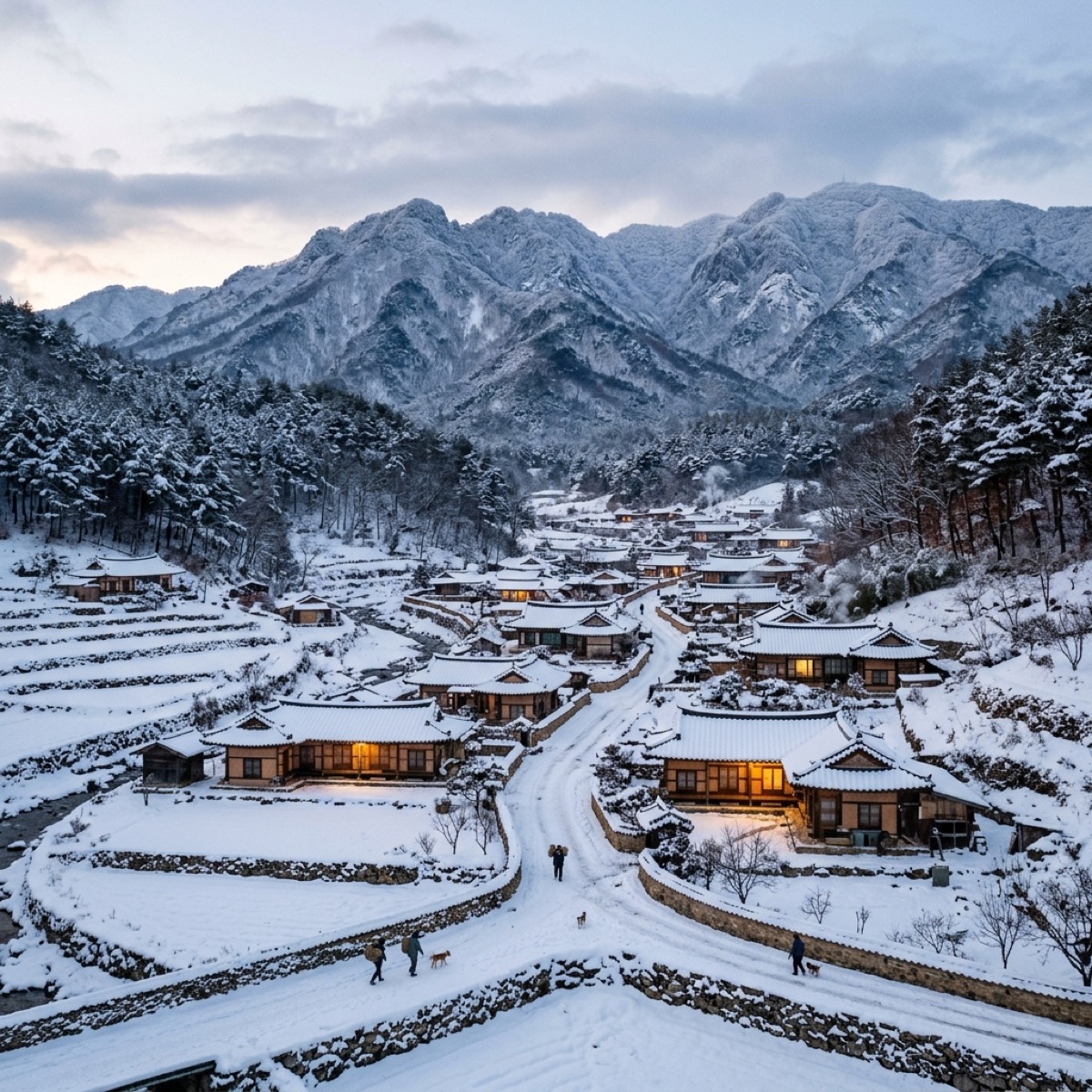
In the mountainous highlands of Pyeongchang County — the region that hosted the 2018 Winter Olympics — winter temperatures routinely plunge to -25°C. While the world saw Pyeongchang's gleaming stadiums and high-speed rail, it did not see the villages behind the mountains: remote farming hamlets where elderly residents still heat their homes with yeontan — coal briquettes — a technology unchanged since the 1960s.
An estimated 1,400 households across Pyeongchang, Jeongseon, and Yeongwol counties still rely on coal briquettes as their primary heat source. These cylindrical coal blocks, burned in under-floor ondol heating systems, produce dangerous levels of carbon monoxide, fine particulate matter (PM2.5), and sulphur dioxide. Every winter, Korea records an average of 42 carbon monoxide poisoning deaths from briquette heating — overwhelmingly among elderly residents living alone in rural areas.
The Rural Eco-Heating Support Project replaces coal briquette systems with modern, clean alternatives — air-source heat pumps and locally-sourced wood pellet boilers — while insulating homes to dramatically reduce energy demand. This is not just an environmental project; it is a lifeline for Korea's most vulnerable communities, sitting at the intersection of energy poverty, climate action, and elder care.
"My grandmother heated her home with yeontan every winter for 40 years. She never complained about the smell, the soot, or the headaches. She thought that was just what winter felt like. After we installed the heat pump, she called me crying — she said it was the first winter she could breathe."
— Choi Min-su, Dasom Saessak Field Coordinator, Pyeongchang
The Challenge
Carbon Monoxide Deaths
Coal briquette heating is South Korea's deadliest household hazard. Improperly ventilated ondol systems leak odourless CO into sleeping areas. Between 2018 and 2024, Gangwon Province alone recorded 67 CO-related fatalities — 89% of victims were over age 70, living alone.
Air Quality & Health
A single coal briquette emits approximately 3.2 kg of CO₂, along with PM2.5, SO₂, and heavy metals. Indoor air quality in briquette-heated homes averages 4.7× the WHO safe limit for fine particulate matter during winter months, driving chronic respiratory illness among elderly residents.
Energy Poverty
Rural elderly households in Pyeongchang earn a median of ₩8,400,000 per year — well below Korea's poverty line. Many choose briquettes not from preference but from necessity: at ₩600 per unit, they are the cheapest heating fuel available. Without subsidised alternatives, the transition to clean heating is financially impossible.
Ageing & Isolation
Pyeongchang County's over-65 population now exceeds 34% — nearly triple the national average. Many elderly residents live alone in homes built 40–50 years ago with minimal insulation. Physical frailty makes handling heavy briquettes increasingly dangerous, and geographic isolation means emergency response times can exceed 40 minutes.
Our Approach
We implement a holistic "Warm Home" conversion model developed with the Korea Energy Agency (KEA) and Gangwon Provincial Social Welfare Council, addressing not just the heating system but the entire thermal envelope of each home.
Home Assessment & Resident Consultation
Our trained field coordinators conduct a full energy audit of each home: measuring heat loss through walls, windows, and roofing; inspecting the existing ondol system; and — critically — sitting with each resident to understand their daily routine, mobility limitations, and comfort needs. No two conversions are identical. A 92-year-old grandmother living alone requires a different solution than a farming couple still actively working their land.
Insulation & Weatherisation
Before installing any heating equipment, we insulate. Our volunteer construction teams — recruited from architecture programmes at Kangwon National University and local trade guilds — install double-glazed windows, wall insulation panels, and door weather-stripping. This "insulate first" approach reduces heating demand by an average of 40%, meaning the replacement system can be smaller, cheaper to operate, and more effective.
Clean Heating Installation
Depending on each home's needs, we install either an air-source heat pump (for homes with stable electricity) or a wood pellet boiler fuelled by locally-produced pellets from Pyeongchang's sustainably managed forestry cooperatives. Every installation includes a smart thermostat with remote monitoring — allowing our team and family members to check that the system is operating safely and the home is maintaining safe temperatures, even when residents are unable to call for help.
Ongoing Support & Winter Check-ins
Every converted household receives 3 years of free maintenance, annual system servicing before winter, and a 24/7 emergency hotline. Our field coordinators conduct monthly welfare check-ins during the November–March heating season — combining equipment inspection with a genuine human connection that combats the isolation many elderly residents face. We are not just installing heaters; we are building a care network.
Project Timeline & Milestones
Pilot Launch — First 24 Homes
Partnership established with KEA, Pyeongchang County Social Welfare Centre, and Kangwon National University. First 24 homes in Bongpyeong-myeon converted from briquettes to air-source heat pumps before the 2021-22 winter. Zero CO incidents recorded across all pilot homes.
Post-Winter Review: 68% Energy Cost Reduction
First-winter data shows converted homes achieved an average 68% reduction in heating energy costs compared to briquette baseline. Indoor PM2.5 levels dropped to within WHO safe limits. Programme receives KEA's "Energy Welfare Innovation" citation.
200th Home Converted — Expansion to Jeongseon
Programme expands beyond Pyeongchang to neighbouring Jeongseon County. 200th home converted. Local forestry cooperative in Daegwallyeong begins producing wood pellets from sustainably thinned pine, creating a closed-loop local energy supply chain and 8 new rural jobs.
Smart Thermostat Network Goes Live
342 homes now connected to the remote monitoring dashboard. System automatically alerts our team if indoor temperature drops below 16°C or if the heating system reports a fault — enabling proactive intervention before emergencies occur. 14 welfare incidents detected and resolved remotely during the 2023-24 winter.
Phase 3 — Yeongwol Expansion (In Progress)
Extending the programme to Yeongwol County, targeting 120 additional households before November 2025. Piloting solar-thermal hybrid systems for homes with suitable roof exposure. Requires ₩5,000,000 more to complete this phase and reach our fundraising goal.
500-Home Milestone & Policy Blueprint
Target: 500 homes converted across three counties. Publish a comprehensive policy blueprint and cost-benefit analysis for submission to the Ministry of Trade, Industry and Energy — advocating for a national rural eco-heating subsidy programme modelled on our approach.
Latest Updates
Summer Insulation Drive — 60 Volunteer Builders Needed
Registration is open for our summer insulation blitz (June–August). We need 60 volunteers with basic construction skills to weatherise 45 homes in Yeongwol before the heating season begins. All materials, accommodation, and meals provided. University service-learning credit available. Sign up here →
Winter 2024-25 Report: Zero Incidents, 4th Consecutive Year
For the fourth consecutive winter, zero carbon monoxide incidents were recorded across all 342 converted homes. Average indoor temperature maintained at 21.3°C. Smart thermostat network detected and resolved 22 equipment issues before residents were affected. Full report →
Solar-Thermal Pilot: 3 Homes Testing Hybrid Systems
Three homes in Daegwallyeong are piloting our new solar-thermal hybrid heating system — combining rooftop solar collectors with heat pump backup. Early data suggests an additional 25% reduction in electricity costs compared to heat pumps alone. Results will inform Phase 3 system selection.