About This Project
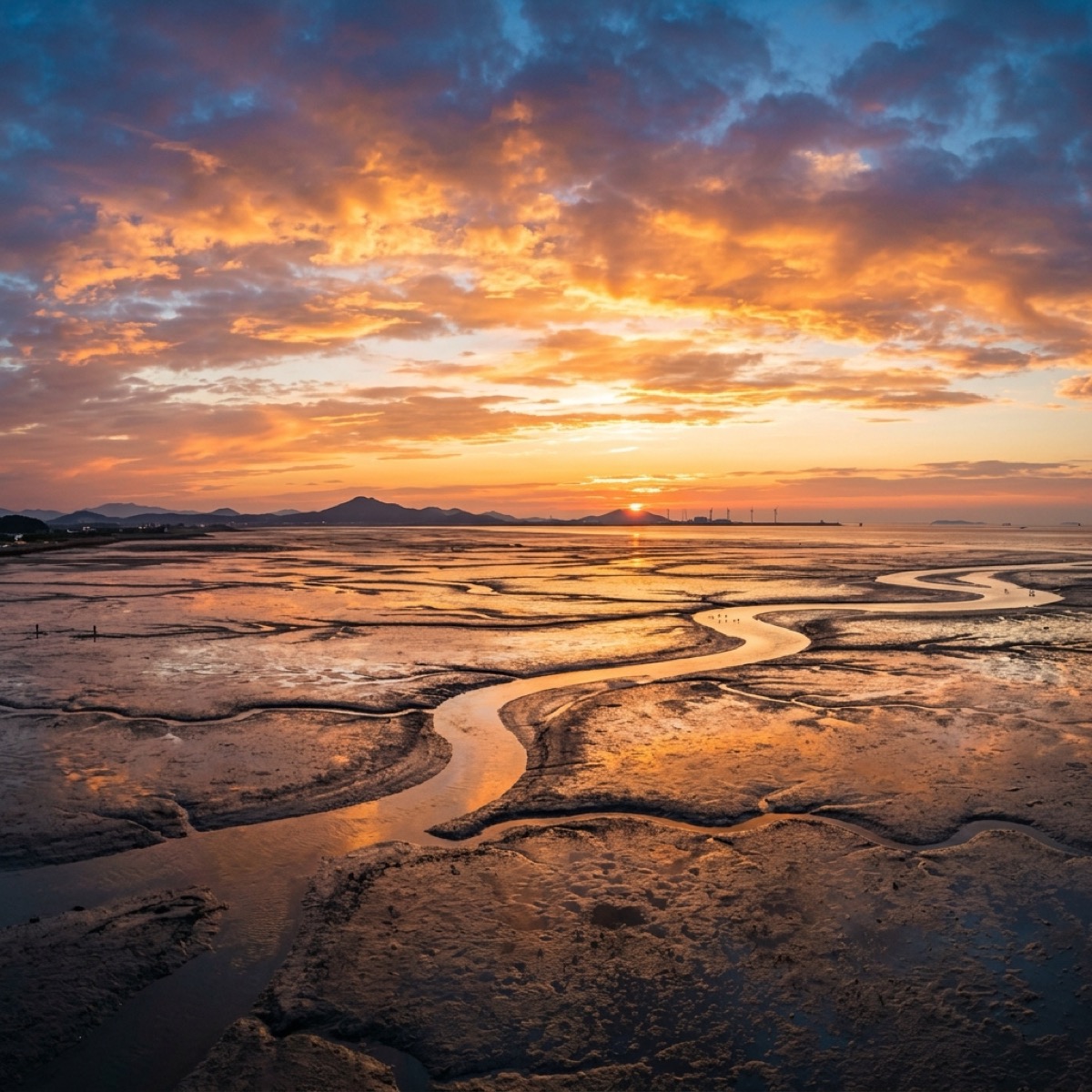
Saemangeum's vast intertidal mudflats historically served as one of the most critical refueling stations along the East Asian-Australasian Flyway (EAAF). Every spring and autumn, hundreds of thousands of migratory shorebirds rely on these mudflats to rest and feed during their arduous 24,000-kilometer round-trip journey between Arctic breeding grounds and Southern Hemisphere wintering zones. However, the construction of the massive 33.9 km Saemangeum Seawall — the longest dike in the world — reclaimed over 40,000 hectares of rich mudflats, triggering a catastrophic drop in migratory bird populations.
Our Saemangeum Tidal Flat Conservation project fights to preserve the remaining intertidal coves outside the seawall. Working alongside international avian coalitions and local community groups, we track critically endangered shorebirds, restore vital seawater exchange, and defend coves from industrial encroachment.
"Saemangeum is not a domestic issue; it is a global ecological hub. If these mudflats collapse, migratory shorebird species across the entire EAAF flyway face extinction."
— Dr. Sarah Jenkins, Flyway Coordinator, BirdLife International
The Challenge
Seawall Blockade
The seawall blocks natural tides, causing mudflats inside the barrier to dry up and lose their complex benthic ecosystem of shellfish, crabs, and polychaetes.
Avian Starvation
Due to mudflat loss, arriving migratory shorebirds are unable to forage enough food to build the fat reserves needed to complete their flights, leading to extreme exhaustion and mortality.
Industrial Expansion
Remaining unprotected shoreline coves are under constant threat of reclamation for industrial zones, ports, and commercial solar energy fields.
Silt Alterations
Upstream damming of the Geum River alters natural sand and mud deposition patterns, causing remaining feeding shallows to harden or erode.
Our Approach
We combine international lobbying, hydrological activism, and community bird monitoring to secure permanent protection for Saemangeum's remaining coves.
Sluice Gate Hydrology & Lobbying
We compile hydrological and biological data to lobby government agencies. Our advocacy successfully secured twice-daily openings of the seawall sluice gates, restoring vital tidal cycles across 600 hectares of inner mudflats.
Sandpiper Telemetry & Mapping
We fit tiny, lightweight radio transmitters on critically endangered Spoon-billed Sandpipers. This tracks their precise foraging spots in Saemangeum, helping us designate high-priority protection areas.
International Flyway Cooperation
We participate in the EAAF Partnership, coordinating our research with groups in Alaska, Russia, China, and Australia to synchronize global conservation policies along the flyway.
Project Timeline & Milestones
Conservation Group Formed
Launched the Saemangeum Shorebird Conservation Group in Gunsan, recruiting 80 local volunteers and veteran bird watchers.
Spoon-billed Sandpiper Sighted
Documented 14 Spoon-billed Sandpipers in the outer Geum River estuary. Captured detailed photographs and feeding behavioral data.
Sluice Gate Opening Agreement
Persuaded authorities to open the seawall gates twice daily, restoring water flows and reviving benthic life in 600 hectares of degraded mudflats.
Defending Yubu Island
Lobbying to declare Yubu Island's mudflats a strictly protected reserve. Launching educational tours to teach Gunsan students about EAAF flyway dynamics.
Estuary Marine Protected Area
Our ultimate goal is to obtain official National Marine Protected Area status for the Geum Estuary and Yubu Island flats, securing permanent protection.
Latest Updates
22 Spoon-billed Sandpipers Documented in Estuary
Our spring census team confirmed a flock of 22 Spoon-billed Sandpipers resting in the Geum River estuary. This represents a massive fraction of their tiny global population. Watch Footage →
Spring Shorebird Migration Survey Completed
Our monitors successfully logged over 8,000 migratory shorebirds across 15 species during their northbound stopover, indicating high usage of the restored sluice zones.
Joint Research Published with BirdLife International
We published a peer-reviewed research paper mapping the remaining mudflat coves in Saemangeum and outlining immediate ecological policy actions.